
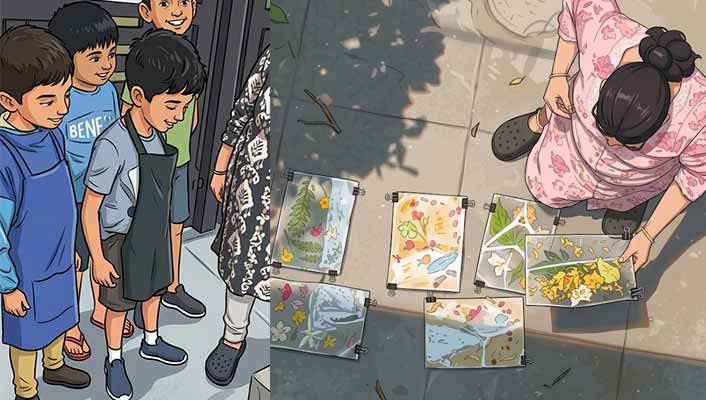
Have you ever wanted to capture the beauty of your garden using nothing but the sun? Welcome to the world of cyanotype printing. Whether you are looking for a fun weekend project or a unique way to preserve your favorite blooms, cyanotype printing for beginners is the perfect mix of science and art.
In this tutorial, we’ll show you how to master cyanotype printing for kids, using simple ingredients and the power of UV light.
What is Cyanotype Printing?
Originally used by architects to make “blueprints,” cyanotype is a 180-year-old photographic process. It uses two iron salts that react to sunlight, turning paper into a deep “Prussian blue.” It’s safe, easy, and feels like a magic trick every time!
The Supplies You’ll Need
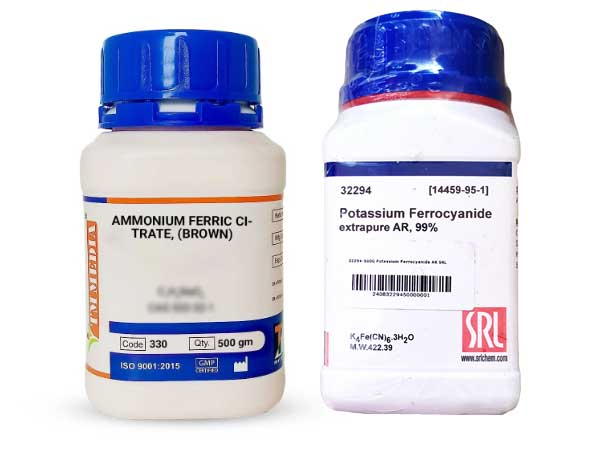
- Ammonium Ferric Citrate (Brown) and Potassium Ferricyanide
- Tap water
- Watercolor paper (thick paper works best!)
- Cyanotype printing flowers, leaves, or twigs
- A sunny day!
DIY Cyanotype Tutorial
1. Mix Your Magic Potions
To start cyanotype printing for beginners, you need to create two stock solutions. Mix 25g of ammonium ferric citrate with 100ml of water (Solution A) and 10g of potassium ferricyanide with 100ml of water (Solution B).
2. Coat Your Paper
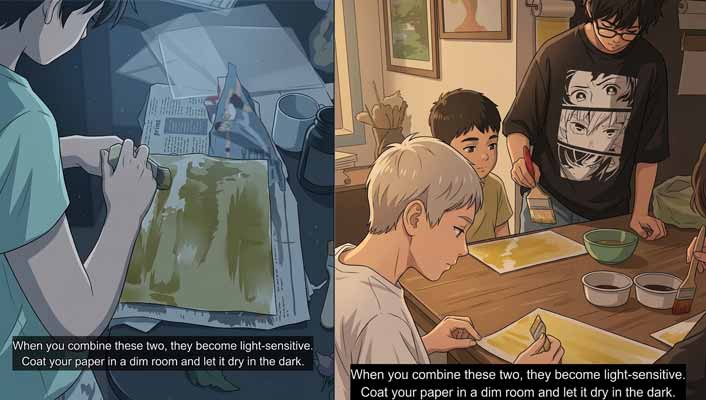
In a dimly lit room, mix equal parts of A and B. Use a brush to coat your paper. Let it dry in a completely dark place. Once dry, your paper is “active” and ready to catch some rays!
3. Design with Nature
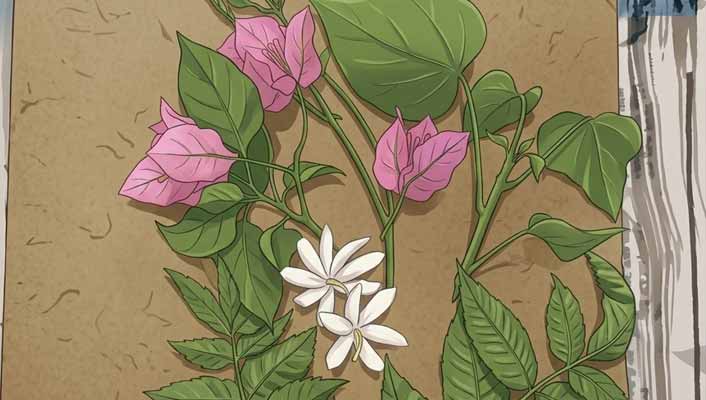
This is the best part of cyanotype printing for kids. Head outside and gather your supplies. Flat items work best—think cyanotype printing flowers, delicate ferns, or even interesting-shaped twigs. Lay them on your paper in a cool design.
4. Let the Sun Bake

Place a piece of clear glass or plastic over your design to keep the wind from blowing your leaves away. Take it outside in direct sunlight. Watch as the paper changes from yellow-brown to a dark, stony grey. Usually, 10–15 minutes is all it takes!
5. The Big Reveal (The Wash)

Take your paper back inside and rinse it in a tray of cold water. Watch closely! The yellow chemicals wash away, and a stunning, bright blue image of your flowers appears. Rinse until the water runs clear, then hang it up to dry.
Tips for beginners
Fresh is Best: Use freshly picked flowers for sharp edges or dried flowers for a vintage, ghostly look.
Watch the Clock: Over-exposed prints will look too dark; under-exposed prints will wash away. Experiment to discover your ideal balance.
Safety: While these chemicals are used, always wear gloves, and adult supervision is recommended for the “little alchemists.”
Are you ready to try your first print? Tag us in your creations and let us know what you decided to print first!